-
Valuing Vaccines

-
Vaccines
- Vaccines of the future
Vaccines of the future
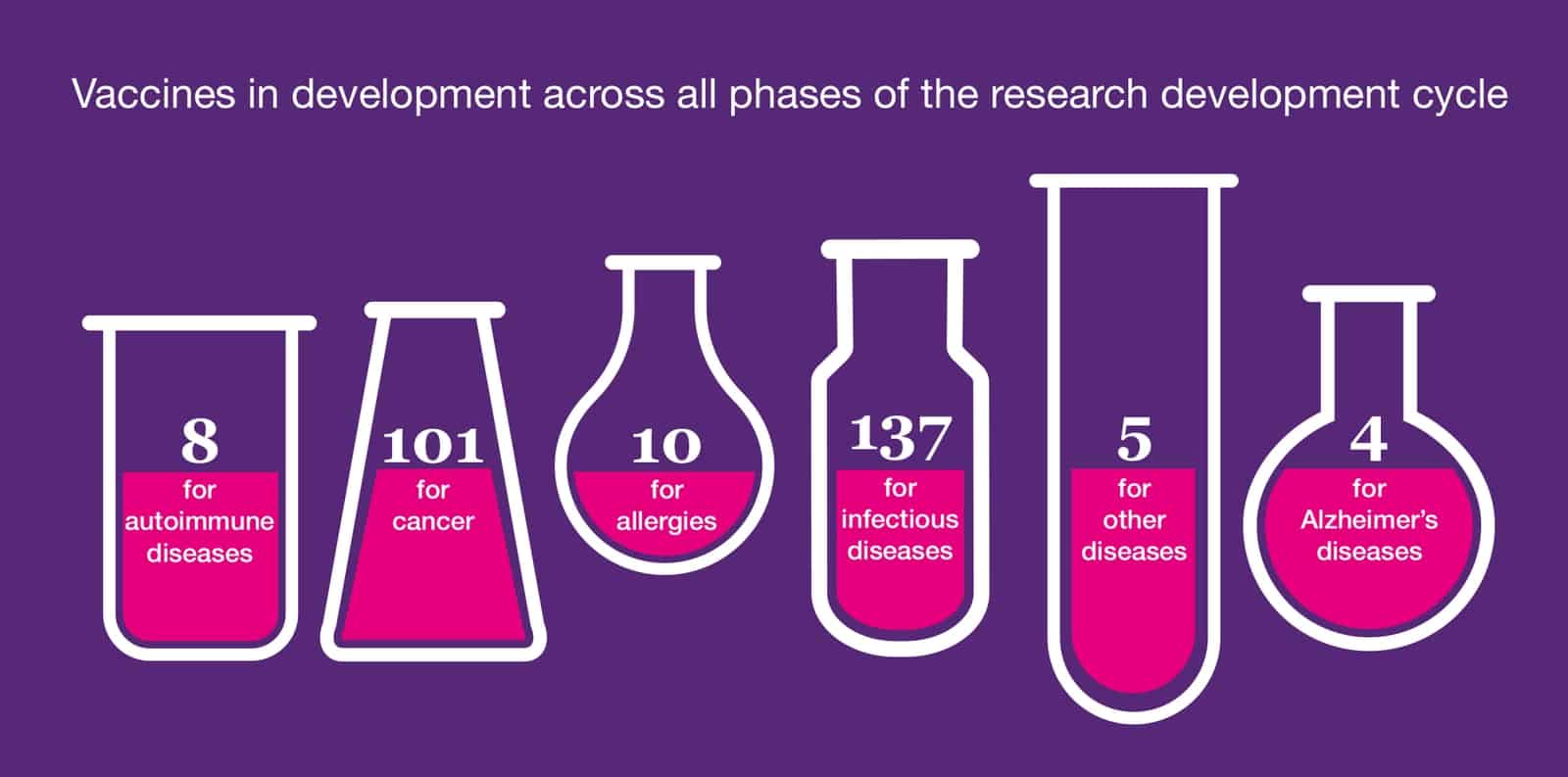
More than 250 vaccines are in development, for diseases including cancers, allergies and Alzheimer’s.1
Pharmaceutical companies are innovating for the next generation of vaccines with more than 250 vaccines2 in development for the prevention or treatment of disease. New technologies are also helping the pharmaceutical industry to find potential new vaccines.
Pipeline vaccines
74% of the COVID-19 vaccines in clinical trials are being developed by the pharmaceutical industry.3
Biopharmaceutical companies have deep scientific knowledge gained from decades of virus research, which is helping dramatically improve the chances of developing an effective vaccine for COVID-19.4
69 vaccines are in Phase III development, including 10 for cancer. 2
Over 250 vaccines are in development for the prevention or treatment of disease across all phases of the research development cycle.1
What technology might help us beat COVID-19?
The global vaccine R&D effort in response to the COVID-19 pandemic has been unprecedented in terms of scale and speed.
The pharmaceutical industry is playing a critical role in research, development and manufacturing.
A range of cutting edge technologies are being used to help speed up the process while maintaining levels of safety
Whole-pathogen viruses
These vaccines can contain either live viruses, weakened viruses (like the Mumps, Measles & Rubella vaccine), or inactivated/killed viruses (like the flu vaccine).
Viral vector technology
Benefits include improved safety, efficacy at a lower dose and the ability to be manufactured at scale.
Nucleic Acid vaccines
These vaccines are very stable, stimulate long-term immunity and could be manufactured relatively easily.
Other vaccines
References
- PhRMA, New Era of Medicine: Vaccines, 2020
- OHE, Realising the Value of Vaccines in the UK: OHE Consulting Report, 2020
- Internal ABPI analysis of the WHO draft vaccine landscape, accessed 2nd October
- ABPI, Coronavirus Rolling Brief, Aug 2020
Last modified: 12 November 2025
Last reviewed: 12 November 2025